
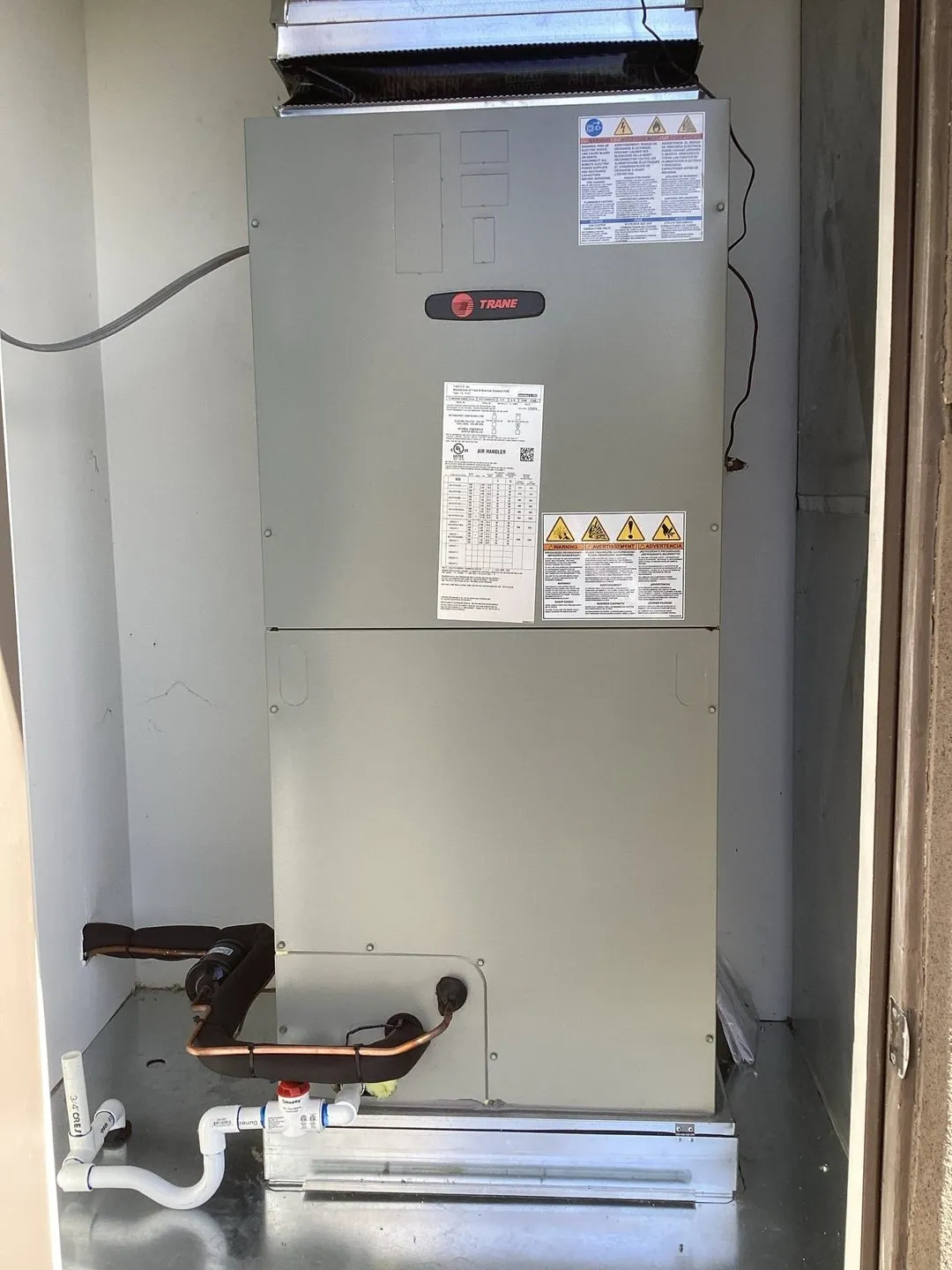
Phoenix has roughly six weeks of winter, and the first cold morning produces the same call from hundreds of Valley homes: the thermostat reads 62, the vents are delivering unheated air, and the system has not operated in heating mode since March. Helping Hands repairs heat pumps, gas furnaces and electric heat across Glendale, Peoria, Surprise, Scottsdale and Phoenix, on the same day for most calls, with the price in writing before work begins.
We are an owner-operated company based in Glendale. Call or text (602) 456-1464 to schedule a repair. Our trucks carry the defrost boards, ignitors, flame sensors and contactors that resolve most Valley heating failures in one visit.
Signs your heating system needs repair
- Cool or lukewarm air from the vents. On a heat pump, mildly warm supply air is normal. Genuinely cold air, or a house that never reaches setpoint, is not.
- The outdoor unit is a block of ice. Light frost that clears periodically is the defrost cycle operating normally. Solid ice on the coil or the fan indicates a defrost failure or low refrigerant.
- The system never shuts off. A heat pump that runs all night without reaching temperature is either losing capacity or leaning on its electric backup strips.
- An APS or SRP bill that doubled in December. The auxiliary heat strips draw several times the power of the heat pump itself. If they run continuously, the bill shows it before the house does.
- The furnace clicks, tries to light, and shuts down. A gas furnace that cycles three times and locks out is usually a dirty flame sensor or a failing ignitor.
- Burning smell on the first cold morning. A few minutes of dusty smell when heat first kicks on is normal. A smell that lingers, or anything electrical or plastic, is not.
- Cold spots in one part of the house. Often ductwork, a damper, or a second system that failed while the first one compensated.
- The thermostat says heat and nothing happens. The cause may be the thermostat, a tripped breaker, a blown low-voltage fuse, a float switch or a failed control board.
- Short cycling. Starts, runs a few minutes, stops, starts again. The house never reaches setpoint and components wear prematurely.
Two items to check before you call: the air filter and the breaker panel. A filter that has not been changed since summer restricts a system as severely in January as in July, and a breaker tripped during a storm is a frequent cause of no-heat calls. If both are in order, call us.
Heat pumps: how most Valley homes stay warm
If your home was built in the last 25 years, it most likely has no furnace. It has a heat pump: the same outdoor unit that cools the house in summer, operating in reverse. Instead of moving heat out of the house, it extracts heat from outdoor air, even at 35 degrees, and moves it inside. It is efficient, it is the appropriate equipment for a climate that heats a few weeks a year, and it has its own characteristic failure modes.
- Stuck reversing valve. The valve that flips the system between cooling and heating can stick in one position. The unit runs but only cools, or only heats. This is the most frequently misdiagnosed heat pump fault.
- Defrost cycle failures. A heat pump must periodically melt frost from its outdoor coil. When the defrost board or sensor fails, the coil ices over, airflow through it stops, and the system loses most of its heating capacity. Steam from the unit for a few minutes is the cycle operating. Continuous steam or a coil encased in ice is the cycle failing.
- Auxiliary heat running constantly. Every heat pump has electric backup strips for the coldest hours. They are designed to supplement for short periods. When a heat pump loses capacity, the strips carry the full load at several times the operating cost. This is the leading cause of a doubled winter bill.
- Thermostat wiring and the emergency heat setting. Smart thermostats installed without a correct heat pump configuration run the strips when they should not, or fail to run the heat pump at all. The emergency heat setting is also frequently misunderstood. It does not mean more heat. It means strips only, at a much higher operating cost.
- Low refrigerant. A heat pump heats with refrigerant the same way it cools with it. A leak that reduced cooling capacity in September reduces heating capacity in December.
- Failed contactors and fan motors. The same components that fail in summer fail in winter, on a cold morning rather than a hot afternoon.
Gas furnaces in older Valley homes
Older homes in central Glendale, the historic Phoenix neighborhoods, Sunnyslope and South Scottsdale often run a gas furnace on Southwest Gas, paired with a separate air conditioner. Some are original to the house. The repairs we see most on them:
- Ignitors. The hot surface ignitor is a brittle ceramic part that lights the gas. When it cracks, the furnace clicks through its ignition sequence and never lights.
- Flame sensors. A thin rod that confirms the burner lit. When it is coated with residue, the furnace lights for a few seconds, cannot confirm the flame, and shuts down. Cleaning or replacing it is one of our most common winter repairs.
- Limit switches. The safety that shuts the burner off if the furnace overheats. When it trips repeatedly, the cause is usually restricted airflow, a dirty filter or a failing blower rather than the switch itself.
- Inducer motors. The small motor that pulls combustion gases out through the flue before the burner lights. When it fails, the furnace will not start, by design.
- Control boards and pressure switches. Boards fail after power surges. Pressure switches fail when the inducer is weak or a condensate line is blocked.
- Cracked heat exchangers. The one fault for which we shut the equipment down immediately. The heat exchanger separates the flame from the air delivered to your rooms. A crack can allow combustion gases, including carbon monoxide, into the house. When we find one, we shut the furnace off, show you the crack, and review replacement options. Every home with a gas furnace should have a working carbon monoxide detector.
If you smell gas, do not troubleshoot. Leave the house, do not operate switches or ignition sources, and call Southwest Gas from outside. Call us once the line has been cleared.
Electric heat and rooftop units
Some older Valley homes and many rooftop package units heat with electric resistance strips alone, no heat pump, no gas. They are simple, costly to operate, and fail at the sequencer, the relay that staggers the strips on, or at the strips themselves. Rooftop package units in Glendale, Phoenix and the Sun Cities combine all components in one cabinet on the roof, and the heating side receives the same sun and dust exposure as the cooling side. We service both.
Why heating systems fail in a warm climate
Phoenix fact. A Valley heating system sits idle for eight or nine months, then is called on at 5 a.m. on the first 38-degree morning. Components that failed unnoticed in October are discovered in December, on the same day, across the Valley.
That is the pattern of heating repair in Phoenix. The cause is not the cold. It is the idle period. Contactors corrode while they sit. Dust settles on flame sensors and ignitors during monsoon season and goes unnoticed until the burner attempts to light. Rodents nest in an unused air handler in the garage or attic and damage wiring. Then the first real cold snap hits north Peoria, Surprise and Anthem, where nights run several degrees colder than central Phoenix, and every one of those faults presents at once.
The other Valley-specific factor is unfamiliarity with heat pumps. Many homeowners who relocated from furnace climates have not lived with one. Lukewarm supply air appears to be a fault. Steam from the outdoor unit appears to be a fault. The emergency heat setting appears to be the solution. Part of a thorough heating repair visit here is distinguishing an actual fault from normal heat pump operation.
How a heating repair call works
- Call or text (602) 456-1464. Describe what the system is doing and the type of system, if known. If the cause is a filter or a breaker, we tell you before scheduling a visit.
- You receive a scheduled arrival window. We send a text message when the technician is on the way.
- A full diagnostic. On a heat pump that means the reversing valve, defrost board and sensor, refrigerant pressures, strip heat operation and thermostat configuration. On a furnace it means the ignition sequence, flame sensor, limit and pressure switches, inducer, and a heat exchanger inspection.
- The price in writing before any work begins. Flat and final. The written price does not change once you approve it.
- Repaired the same day on most calls. The components that fail most often in the Valley are on the truck. We review the failed component with you, confirm the system is holding temperature, and configure the thermostat for efficient heating.
Heating repair or replacement: how we decide
A heat pump in Arizona works harder than almost anywhere in the country, because it cools for nine months and heats for three. Twelve to fifteen years is a full service life. That does not mean a fifteen-year-old unit with a failed defrost board requires replacement. It means we evaluate the complete system: the compressor’s health, the refrigerant type, how many repairs it has needed in the last two summers, and what the repair costs against a new system.
If the repair is a minor component on a sound system, we repair it. If the compressor or reversing valve has failed on an R-22 unit that has required repairs in each of the last two summers, replacement is the better value, and we present both figures in writing for your decision. Our heater replacement page explains how we size and install a new one. If another contractor has recommended a new system, our second opinion is free.
Heating problems we see in each city
We are based in Glendale and most of our work is within a 30-minute drive. Winter-specific notes on the areas we serve.
Glendale: mixed furnaces, heat pumps and thermostat setups
The older blocks between downtown and 59th Avenue have a real mix: gas furnaces original to the house, rooftop package units, and heat pumps added when the AC was replaced. That mix produces reversing valve and thermostat configuration calls, because the equipment changed and the thermostat did not. Arrowhead and the newer subdivisions to the north are almost entirely heat pumps. Heating repair in Glendale has our shortest response times.
Peoria: colder nights and heat pump defrost failures
North Peoria sits higher and runs a few degrees colder on winter nights than the central Valley, and the newer heat pumps in Vistancia and along Lake Pleasant Parkway defrost more often as a result. A defrost board failure there is evident quickly. Older homes near Old Town and Peoria Avenue are more often on furnaces or package units. See heating repair in Peoria.
Surprise: heat strip bills and aging defrost boards
Winter mornings in Surprise get cold enough that heat strips run more than people expect, so high-bill calls are common here in January. The 2000s-era heat pumps across Marley Park and the Bell Road corridor are at the age where defrost boards start failing, and the rooftop units in Sun City Grand require a technician who performs the inspection on the roof. See heating repair in Surprise.
Scottsdale: closet furnaces and multi-heat-pump homes
South Scottsdale and the neighborhoods around Old Town have block homes from the 60s and 70s, many with gas furnaces in a hall closet and ductwork that has been reworked more than once. Flame sensors, ignitors and airflow-related limit trips are the typical calls. Larger homes further north often run two or three heat pumps, and one has typically failed unnoticed before the cold wing of the house is discovered. See heating repair in Scottsdale.
Phoenix: older gas furnaces and cracked heat exchangers
Most of North and West Phoenix is inside our normal range. The historic districts near downtown and Sunnyslope have some of the oldest gas furnaces in the Valley, which is where we find cracked heat exchangers. Moon Valley, Deer Valley and the I-17 corridor are mostly heat pumps and the occasional rooftop unit. See heating repair in Phoenix.
We also regularly serve Goodyear, Avondale, Litchfield Park, Sun City, Sun City West, Anthem, Cave Creek and Paradise Valley. If your area is not listed, call to confirm coverage.
Why homeowners call Helping Hands for heating repair
- Owner-operated. Aaron Hoberg holds the license and oversees every job. Based in Glendale.
- Heat pump expertise. Most of the Valley heats with one, and many reported heating failures are misdiagnosed or misconfigured heat pumps. We correct the actual fault.
- The price in writing before work begins. A flat, written figure that you approve first.
- Combustion safety on every furnace visit. A heat exchanger inspection is included, and we go over any finding with you.
- Licensed, bonded and insured. Arizona ROC #365835, CR-39 Air Conditioning and Refrigeration.
- 5.0 stars on Google. Honesty is the quality customers mention most.
- Same-day service on most calls. Monday through Saturday, 7 to 5, with a scheduled arrival window.
- Residential and light commercial. Homes, rooftop units on small offices, shops and restaurants.
- Repair when repair is the better value. If your system has service life remaining, that is what we recommend.
Common heating repair questions
Answers to the questions we are asked most often. For anything else, call or text (602) 456-1464.
My heat pump is blowing cool air. Is it broken?
Maybe not. Heat pump air feels cooler than furnace air by design, usually 85 to 95 degrees at the vent instead of 120-plus, so it can feel lukewarm on your hand while still warming the house. If the house is holding temperature, the system is likely operating correctly. If the thermostat setpoint is not being reached, or the supply air is genuinely cold, call us. A stuck reversing valve, low refrigerant or a failed defrost board are the usual causes.
Why is there steam coming off my outdoor unit in winter?
That is the defrost cycle, and it is normal. On cold, damp mornings frost builds on the outdoor coil, the system briefly reverses itself to melt it, and the frost turns to steam. A few minutes of steam a couple of times an hour is normal operation. A unit encased in ice, or one that steams continuously, indicates a defrost fault and should be inspected.
What does 'emergency heat' on my thermostat actually do?
It switches a heat pump off and runs only the electric backup strips, which cost several times more per hour to run. It exists for when the outdoor unit has failed, not for cold mornings. If it was switched on for warmer air and left there, that is a common cause of a doubled APS or SRP bill. We check the system and configure the thermostat so the setting is not needed.
How fast can you get to a no-heat call?
Most heating repair calls in Glendale, Peoria, Surprise, Scottsdale and Phoenix receive same-day service, Monday through Saturday, 7 to 5, with a scheduled arrival window. The first cold snap of the year brings a high volume of calls at once, and on those mornings we confirm your place in the schedule when you book.
How much does heating repair cost?
The cost depends on the component that failed, so we do not estimate over the phone. There is a $99 service fee for the visit and a full diagnostic, and we waive it when you go ahead with the repair. After the diagnostic you receive a flat, written price for the repair, which you approve before any work begins. Many winter repairs, such as a flame sensor or a defrost board, are at the lower end of the range.
Should I repair or replace a 15-year-old heat pump?
It depends on the component that failed and the condition of the rest of the system. A heat pump works year-round here, cooling nine months and heating three, so fifteen Arizona years is substantial wear. If the compressor is sound and the repair is a minor component, we recommend repair. If the compressor or reversing valve has failed and the unit runs on R-22, replacement is usually the better value, and we present both figures in writing. If another contractor has recommended replacement, our second opinion is free.
Is a cracked heat exchanger really dangerous?
Yes. The heat exchanger is the metal wall between the burner flame and the air that goes into your house. A crack can let combustion gases, including carbon monoxide, into that air. It is the one furnace fault for which we shut the equipment down immediately. We recommend every home with a gas furnace have a working carbon monoxide detector, and if yours goes off, leave the house and call from outside.
Do you work on gas furnaces or only heat pumps?
Both, plus electric strip heat and rooftop package units. Most Valley homes built since the late 1990s heat with a heat pump, while older Glendale, Phoenix and South Scottsdale homes on Southwest Gas often have a gas furnace paired with a separate AC. Our trucks carry ignitors, flame sensors, contactors and defrost boards for the common brands.