
A fresh gray film appears on furniture two days after cleaning. Someone in the house wakes up congested every morning. A back bedroom smells stale by the end of summer. These are common conditions in Phoenix-area homes, not imagined ones. Air in the Valley carries more dust, more pollen and more fine particulate than almost anywhere else in the country, and most homes were never equipped to handle it.
Helping Hands is an owner-operated heating and cooling company based in Glendale. We approach indoor air the same way we approach every other job: identify the actual cause, explain it clearly, and provide the price in writing for your approval before any work begins. Call or text (602) 456-1464 to schedule an assessment.
Why Valley air is hard on homes
Every climate has its own air quality problem. Ours is dust and particulates, not humidity, and that determines which solutions are effective.
- Monsoon dust storms and haboobs. From late June through September, dust fronts cross the Valley and settle on every surface. That dust enters the attic, the return ducts and the outdoor condenser coil. A single storm can load a filter that was clean the week before.
- Spring pollen. Mesquite and palo verde bloom heavily in March and April. Mulberry trees, planted throughout the older neighborhoods, produce some of the most allergenic pollen in the state. Bermuda grass pollinates from spring through fall. A closed house with a marginal filter recirculates all of it.
- The winter brown cloud. On still, cool mornings from November through February, a layer of particulate pollution settles over Phoenix. Wood smoke, traffic emissions and dust are trapped near the ground. It is visible from the freeway and it is present indoors as well.
- Desert soil and Valley fever. Valley fever is a fungal infection contracted by breathing spores in disturbed desert soil, and Maricopa County reports more cases than any other county in the country. We are HVAC contractors, not physicians, and we do not make health claims. Sealed ducts and effective filtration do reduce the amount of outdoor dust circulating inside, which matters most for homes near open desert or active construction.
- Homes closed for five months. From May through September, windows stay shut. Cooking smoke, pet dander, cleaning products and tracked-in dust remain inside and cycle through the same system, sometimes twenty hours a day.
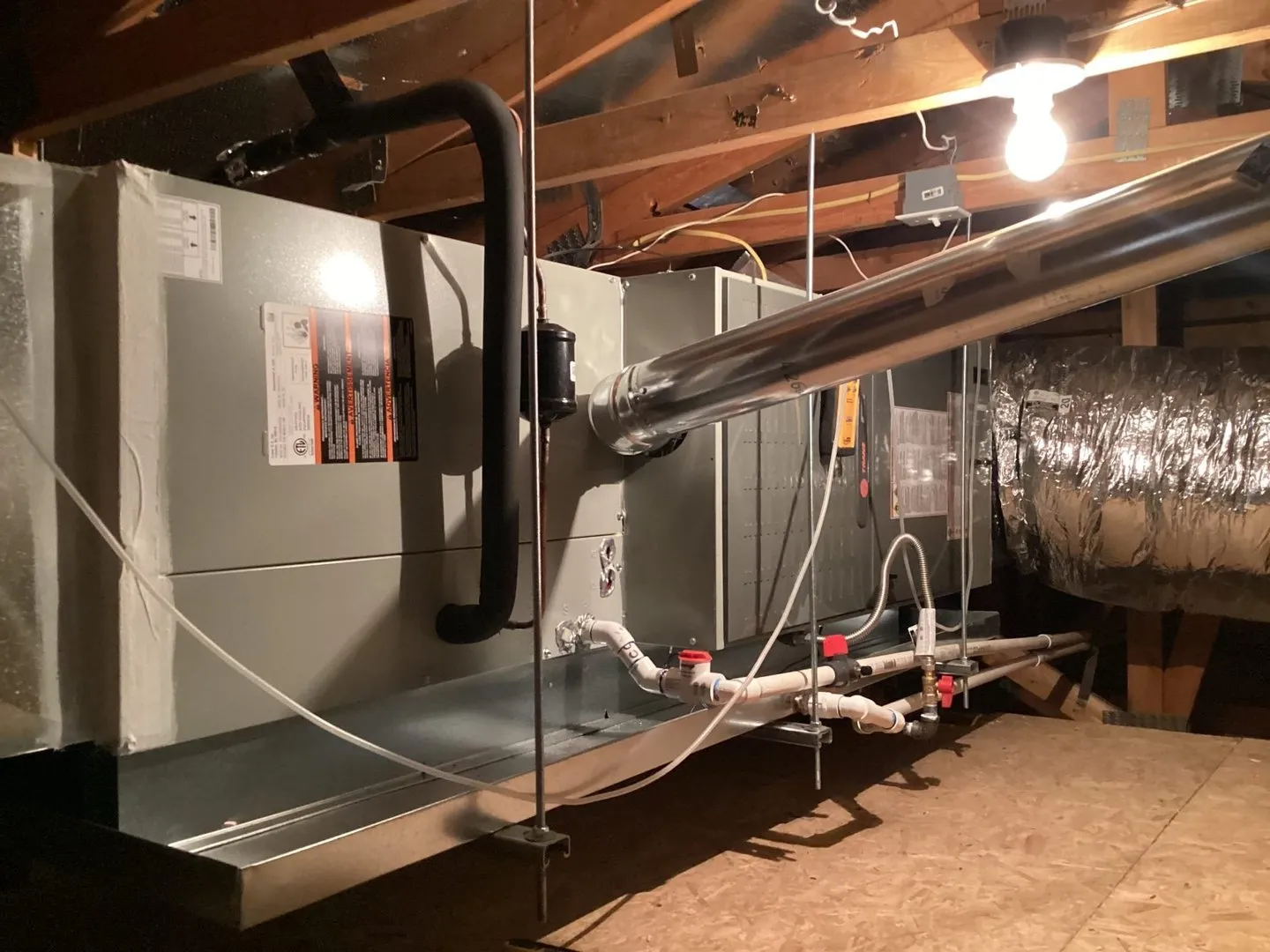
- Attic heat and leaking ducts. Most Valley air handlers and ductwork sit in attics that reach 140 degrees. Duct tape dries out, joints separate, and flex duct gets crushed by stored items. Every gap on the return side draws hot, dusty attic air into the system before it reaches the filter.
Phoenix fact. Leaking ductwork can waste as much as 20 to 30 percent of the cooled air a system produces, and every gap on the return side is a point where attic dust enters the house without passing through the filter.
Because Valley air is dry, the dehumidifiers and moisture controls sold in humid climates do not apply here. The work that produces results in Phoenix is filtration, sealed ducts, clean coils and correct airflow.
Signs your home’s air needs attention
Some of these present as an AC problem and some as a cleaning problem. They usually trace to the same set of causes.
- Dust returns within a day or two of cleaning. Especially a fine gray dust rather than ordinary household lint. That is attic or outdoor dust arriving through the ducts.
- Allergy or asthma symptoms that are worse at home than at work, or worse in the morning after the system has run overnight.
- A stale, musty or dirty-sock odor when the system starts. Usually growth on a wet indoor coil or in the drain pan.
- One room that is consistently warmer, stuffier or dustier than the rest. A return or supply problem rather than a thermostat problem.
- Dark streaks around supply registers or on the filter frame. Air is bypassing the filter.
- A filter that is gray and loaded after three weeks. Either the system is drawing dust from an unintended source or the return grille is poorly located.
- Heavy dust inside the air handler or on the blower wheel. A technician will observe this on a maintenance visit. It indicates the filter is undersized or being bypassed.
- Higher power bills with no change in usage. A dirty coil and blower wheel force the system to run longer to do the same work. Cleaner air and a lower APS or SRP bill often result from the same repair.
Indoor air quality solutions that work in Arizona
We do not sell a fixed package. These are the available tools, and we recommend the ones your home requires.
- Filtration, correctly sized. MERV is the rating scale for the particle size a filter captures. A higher rating captures more, but a filter too restrictive for the blower starves the system of airflow, raises the bill and can freeze the coil. We match the filter grade to the system. The correct solution is frequently a wider return or a deeper filter slot rather than a denser one-inch filter.
- Media filter cabinets. A four- or five-inch pleated filter in a purpose-built cabinet at the air handler. It provides far more surface area than a one-inch filter, so it captures finer dust without restricting airflow, and it lasts months rather than weeks.
- Whole-home air purifiers. Installed in the ductwork so all air the system moves passes through them. Appropriate for households with allergies, pets or sensitivity to smoke and particulates. We describe what each type does and does not do before you choose one.
- UV lights at the coil. The indoor coil is wet and dark whenever the system runs, which is where growth begins and where musty odors originate. A UV lamp keeps the coil surface clean. It is a coil treatment, not an air cleaner, and we present it as such.
- Duct sealing and repair. We locate disconnected runs, crushed flex duct, dried joints and leaking return boxes in the attic and repair them. This is usually the highest-value indoor air project in a Valley home because it stops dust at the source and returns conditioned air to the rooms instead of the attic.
- Return-air improvements. Many Valley homes were built with a single central return that closed bedroom doors starve of airflow. Adding a return or a jumper duct resolves the warm, stuffy bedroom and balances the whole house.
- Ventilation. Introducing a controlled amount of filtered outside air during the months when windows stay closed, so the same air is not recirculated indefinitely.
- Coil and blower cleaning. The fastest improvement is sometimes removing years of accumulated dust from the components that move the air. It is available as an add-on to a tune-up and is one of the most effective ways to deliver cleaner air.
How an indoor air quality visit works
- Call or text (602) 456-1464. Describe what you are noticing: dust, odors, allergy symptoms, a room that will not cool. We will ask a few questions about the house and the system.
- We inspect the full air path. Filter and filter slot, return grilles, the air handler and coil, the attic ductwork, and the supply registers in every room. We are looking for where dust enters and where conditioned air escapes.
- We measure airflow. Static pressure and register airflow tell us whether the system is moving the volume it should, and whether a denser filter would help or restrict it.
- You receive itemized options, priced in writing. A list of what we found, what corrects it, and what each option costs, so you can complete all of it or begin with the item that matters most. The estimate is free.
- We complete the work and verify the result. New filter cabinet, sealed ducts, cleaned coil, whatever scope you approved. We then confirm airflow at the registers before leaving.
Cleaner air depends on a healthy system
Indoor air quality and system condition are the same subject. A dirty evaporator coil produces odor, reduces capacity and extends run time. A blower wheel coated in dust moves less air and draws more power. Leaking return ducts pull 140-degree attic air into a system that is trying to cool the house.
That is why we evaluate air quality on every AC repair and maintenance call, and why many complaints that seem to call for a larger system turn out to be airflow and duct problems that a new system would not have resolved. A recommendation to add a second unit for a dusty, uneven house should be supported by a static pressure measurement. If none was taken, a second opinion is warranted.
How air quality problems differ across the Valley
We are based in Glendale and work across the West Valley and Phoenix. The air quality picture changes somewhat from one part of the Valley to another.
Glendale: spring pollen and monsoon dust
Our home base. The older blocks around downtown Glendale have mature mulberry and olive trees, which provide shade and heavy pollen every spring. Toward the Loop 303 and the newer subdivisions, homes sit close to open desert and receive the full monsoon dust load. Both benefit from sealed returns and a proper filter cabinet. See our Glendale page.
Peoria: construction dust and separating attic ducts
North Peoria and the neighborhoods along Lake Pleasant Parkway border undeveloped desert and active construction, so fine dust and disturbed soil are constant. Attic ductwork in the 2000s-era homes is now old enough to separate at the joints. Older Peoria near the Agua Fria has the mature-tree pollen issue instead. Indoor air quality in Peoria.
Surprise: field dust and undersized return air
The far West Valley is where agricultural fields meet new rooftops. Cultivated fields and dairies west of the city send dust east on the afternoon wind, and the homes built quickly during the 2000s often have minimal return air. Surprise is where we do much of our return-air and duct-sealing work. Indoor air quality in Surprise.
Scottsdale: leaky remodeled ductwork and weak returns
South Scottsdale and the neighborhoods near Old Town have ductwork from the 1960s and 1970s that has been patched, rerouted and taped through several remodels. Leaks and undersized returns are the norm, and those homes are where a duct inspection produces the largest return. Farther north, larger homes with multiple systems often have one zone that never receives enough return air. Indoor air quality in Scottsdale.
Phoenix: the winter brown cloud and older ductwork
Central Phoenix and the historic districts carry the winter brown cloud and decades-old ductwork at the same time. North Phoenix along I-17 and toward Anthem receives open-desert dust. West Phoenix and Maryvale have many rooftop package units with short duct runs where a filter upgrade alone produces a noticeable difference. Indoor air quality in Phoenix.
We also work regularly in Goodyear, Avondale, Litchfield Park, Sun City, Sun City West, Anthem, Cave Creek and Paradise Valley. If your area is nearby and not listed, contact us to confirm coverage.
Why homeowners trust us with their indoor air
- We measure before we recommend. Static pressure, airflow and an inspection of every duct. No assumptions and no fixed packages.
- Accurate descriptions of every product. A UV light cleans a coil. A purifier cleans air. A filter is only effective when the ducts are sealed. We explain each one on those terms.
- Owner-operated. Aaron Hoberg holds the license and oversees every job. Based in Glendale.
- A written price approved by you before work begins. Every option itemized so you choose the scope.
- Licensed, bonded and insured. Arizona ROC #365835, CR-39 Air Conditioning and Refrigeration.
- 5.0 stars on Google. Honesty is the quality customers mention most.
- Residential and light commercial. Homes, small offices, shops and restaurants.
- Scope matched to the problem. If a new filter and an afternoon of duct sealing resolves it, that is the scope we recommend.
Indoor air quality questions
Answers to the questions we are asked most often. For anything else, call or text (602) 456-1464.
Will a better air filter fix the dust in my house?
It helps significantly, but only if the ducts are sealed. A higher-grade filter captures finer dust as air passes through it. If a return duct is pulling attic air through a gap, that dust bypasses the filter, enters the supply side and settles on your furniture. We inspect both. Most dusty Valley homes need a better filter and a duct repair, and we identify which before recommending either.
What MERV rating should I use in Arizona?
For most Valley homes, a MERV 4 to 8 filter is the correct balance of capture and airflow. A rating higher than the system was designed for restricts airflow, raises the power bill and can freeze the indoor coil in July. For hospital-grade capture, the correct solution is usually a media filter cabinet or a whole-home purifier that adds filtration without restricting the blower, rather than a denser filter in the existing one-inch slot.
How often should I change my AC filter in the Phoenix area?
Every one to three months, and closer to monthly from June through September when the system runs continuously and monsoon dust is in the air. Homes with pets, homes near open desert and homes with a filter in a ceiling return need more frequent changes. If you cannot see light through the filter, it is overdue.
What does a UV light do?
A UV light mounted at the indoor coil keeps that coil clean. The coil is wet and dark whenever the system runs, which is where biological growth develops and produces odor. UV inhibits that growth on the coil surface. It does not treat air passing through the ducts at speed, so it is a coil treatment rather than a whole-house air cleaner, and we describe it to customers as exactly that.
One room in my house never cools down. Is that an air quality problem?
Often, yes. A room that stays warm usually has a return-air deficiency, a crushed or disconnected duct in the attic, or too little supply for its size. The same conditions that leave the room warm also leave it dusty and stuffy. Correcting the airflow resolves both, and it costs far less than adding a second system to serve one room.
Is Valley fever something I should worry about from my ducts?
Valley fever is a fungal infection contracted by breathing spores in disturbed desert soil, and Maricopa County reports more cases than any other county in the country. We are HVAC contractors, not physicians, and we do not make health claims. What we can say is that effective filtration and sealed ducts reduce the amount of outdoor dust circulating inside the home, which matters most near open desert or active construction.
How much does indoor air quality work cost?
It depends on what the home needs. A filter upgrade with duct sealing is a small project. A whole-home purifier or an added return is a larger one. We inspect first, then provide a written price for each option so you can choose the scope. The inspection and estimate are free, and every price is approved by you before work begins.